Artwork Statement — Toned by Memory
“Toned by Memory” is a photographic project that uses cyanotype and food toning to explore identity, nostalgia, and the ambiguous space occupied by those who relocate and rebuild their lives elsewhere. The work began with my early observations after moving to the United Kingdom: many newcomers are deeply attached to the flavours of their hometowns. Some search tirelessly for restaurants that might replicate a familiar dish; some who never cooked before suddenly learn to recreate the tastes they miss; others begin to grow vegetables in foreign soil, hoping to recover the memory of home through cultivation.
These everyday gestures reveal a tension beneath the surface — the desire to assimilate into a new place coexists with the realisation that certain things are already embedded within us. This raises a fundamental question: Who are we becoming? Are we still Hongkongers? Have we become British? Or do we now reside in a space between identities, unnamed and undefined?
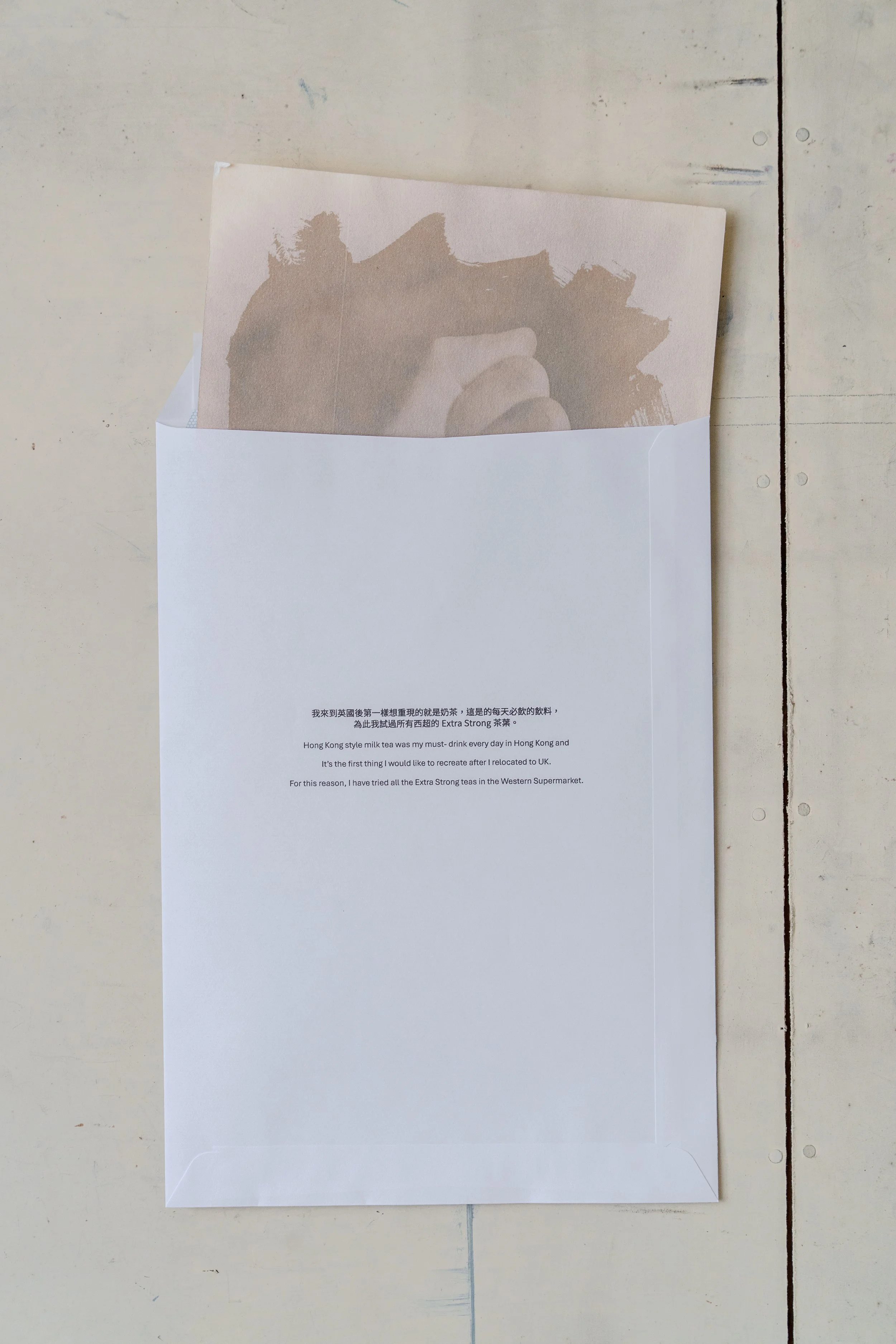
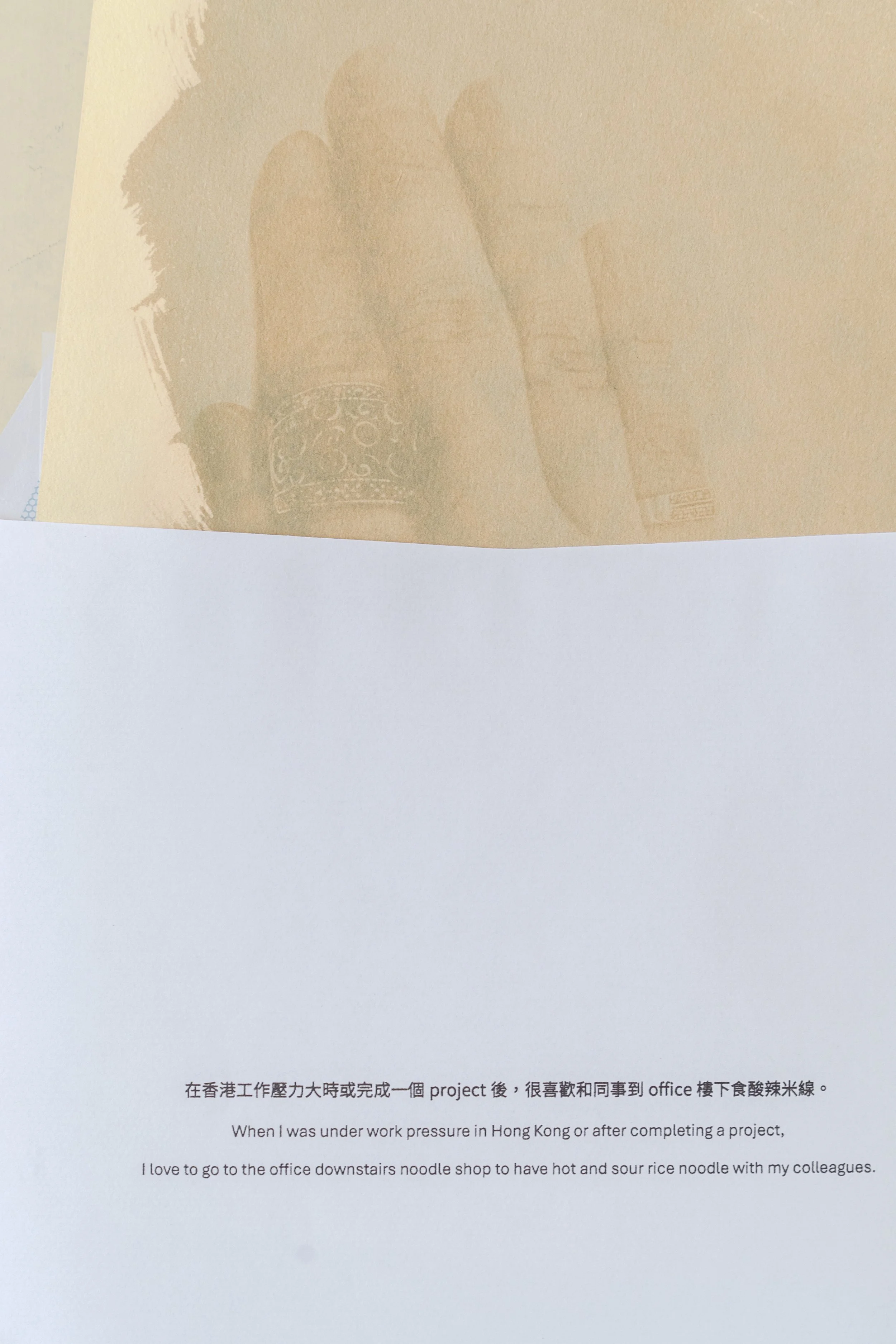
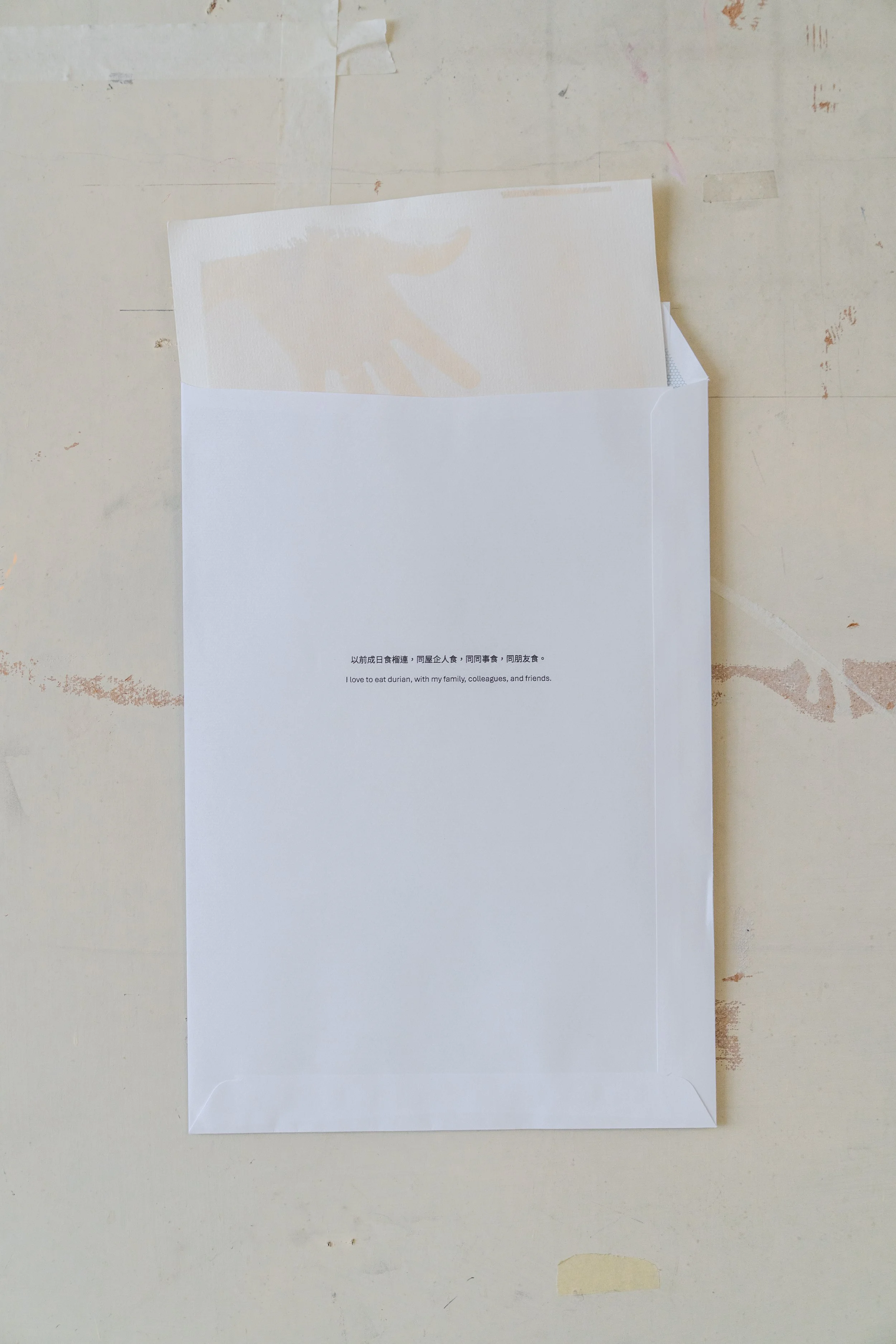
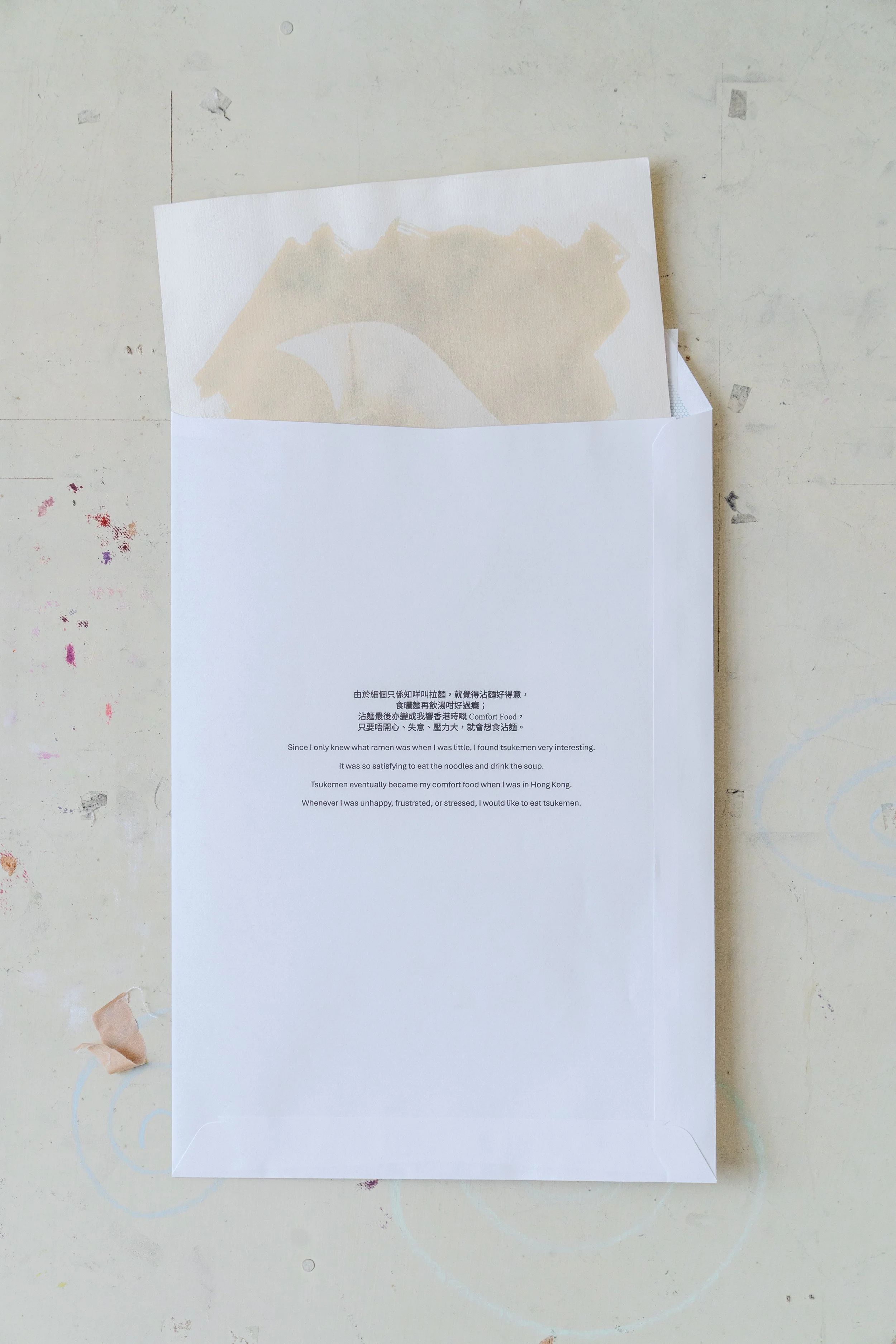
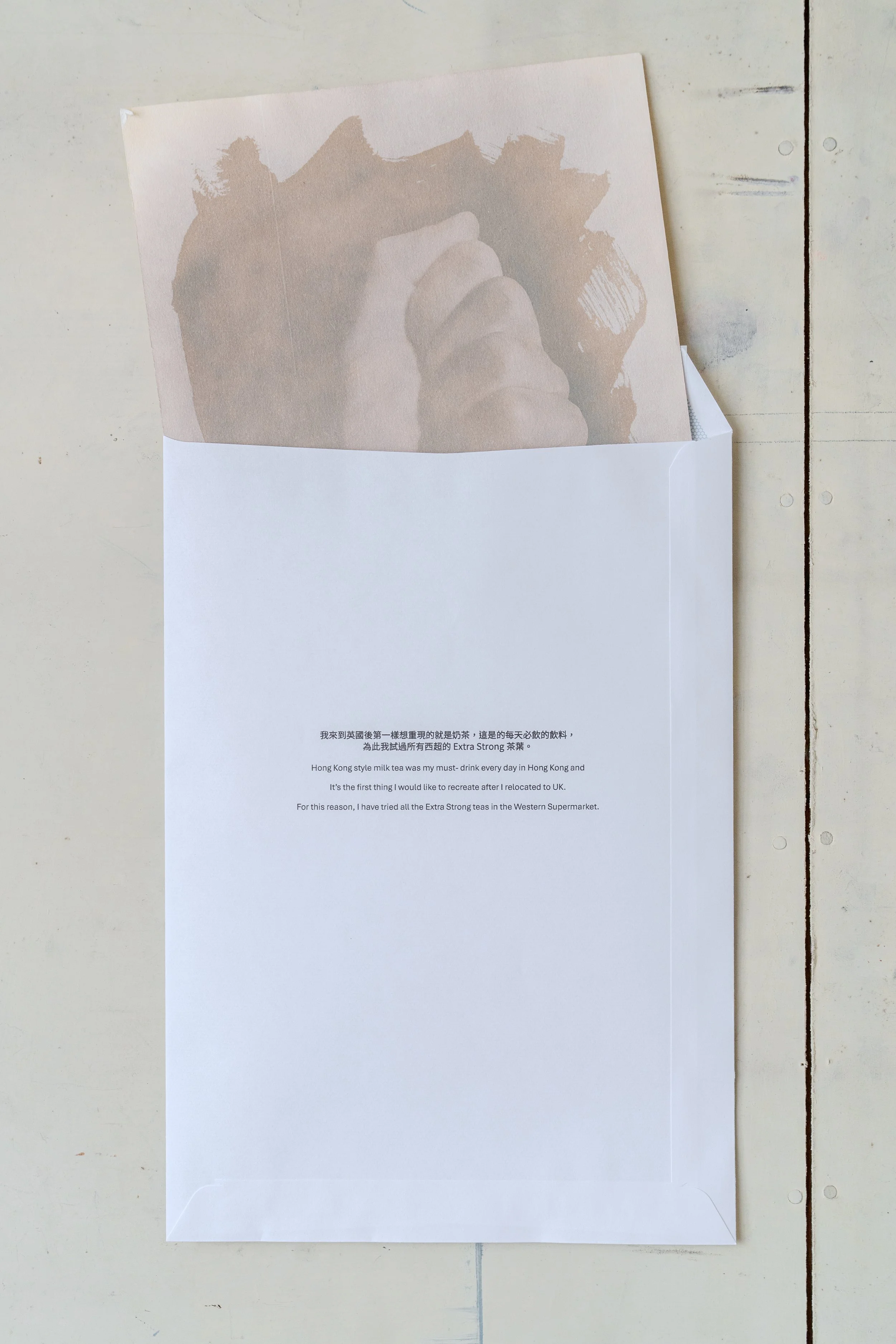
The cyanotype process mirrors this uncertainty. Through bleaching when toning, the original image is stripped away, faded, or lost. Through food toning, each photograph is recoloured by the ingredients participants associate with home. Different foods create different tones, and in some cases, the image becomes faint or nearly blank — echoing the experience of migrants whose search for identity does not always lead to clarity, and sometimes ends in absence, erasure, or an unfinished sense of self.
Throughout my conversations with participants, I discovered that what they miss is rarely the food itself. Instead, it is the people with whom they once shared the meal — partners, family members, colleagues. Flavour becomes a conduit for connection; memory becomes a form of belonging. Identity, too, is shaped through these relationships.
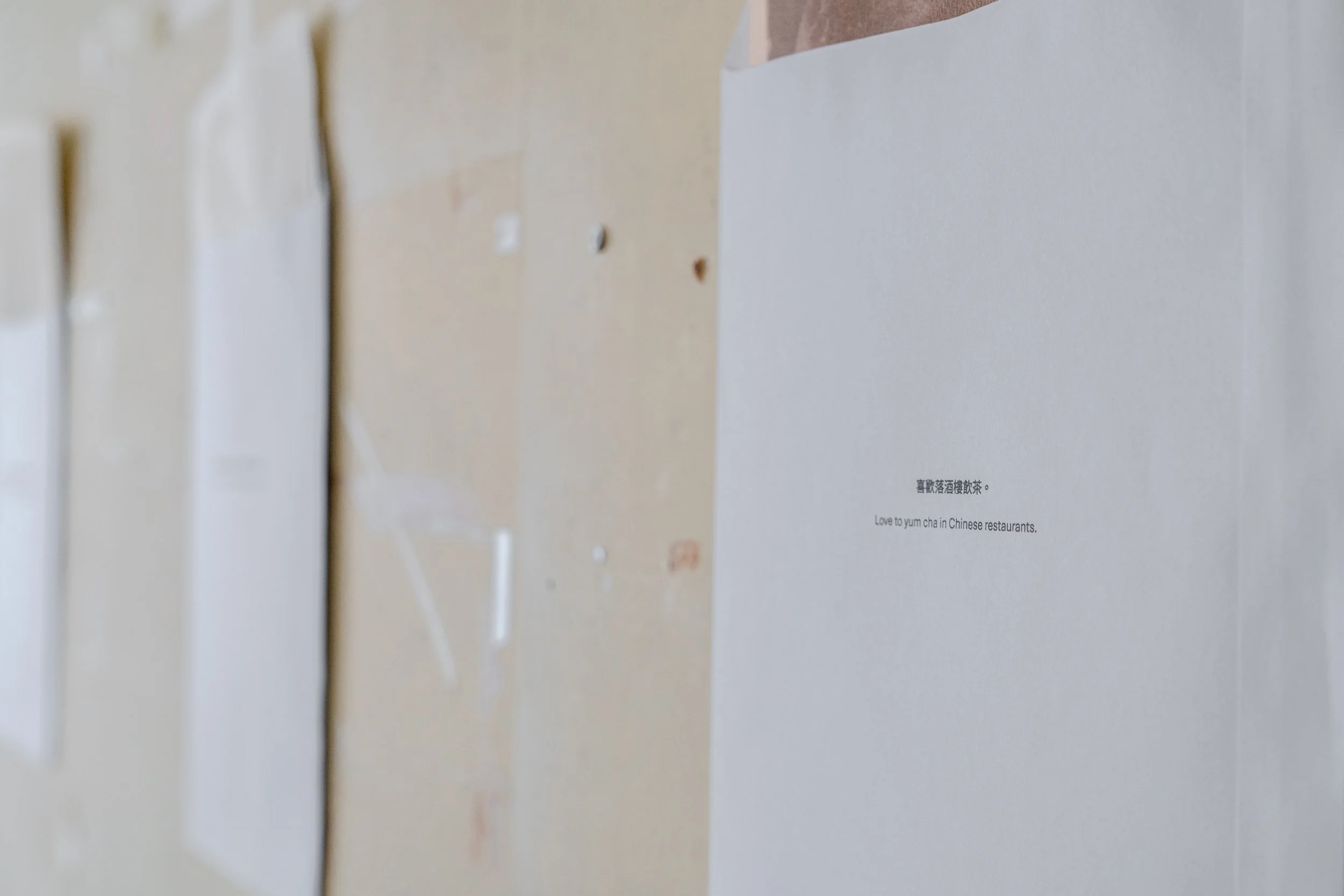
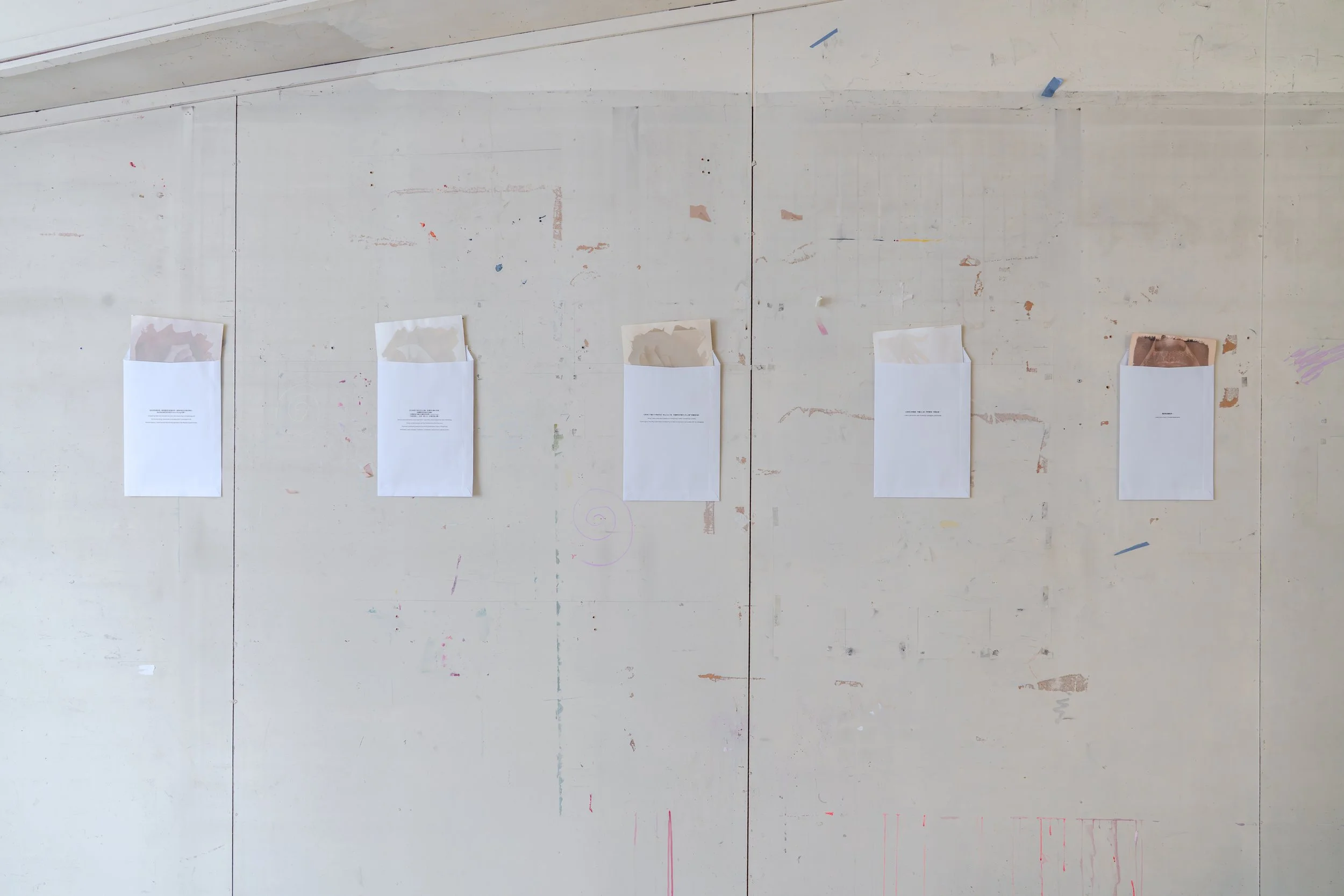
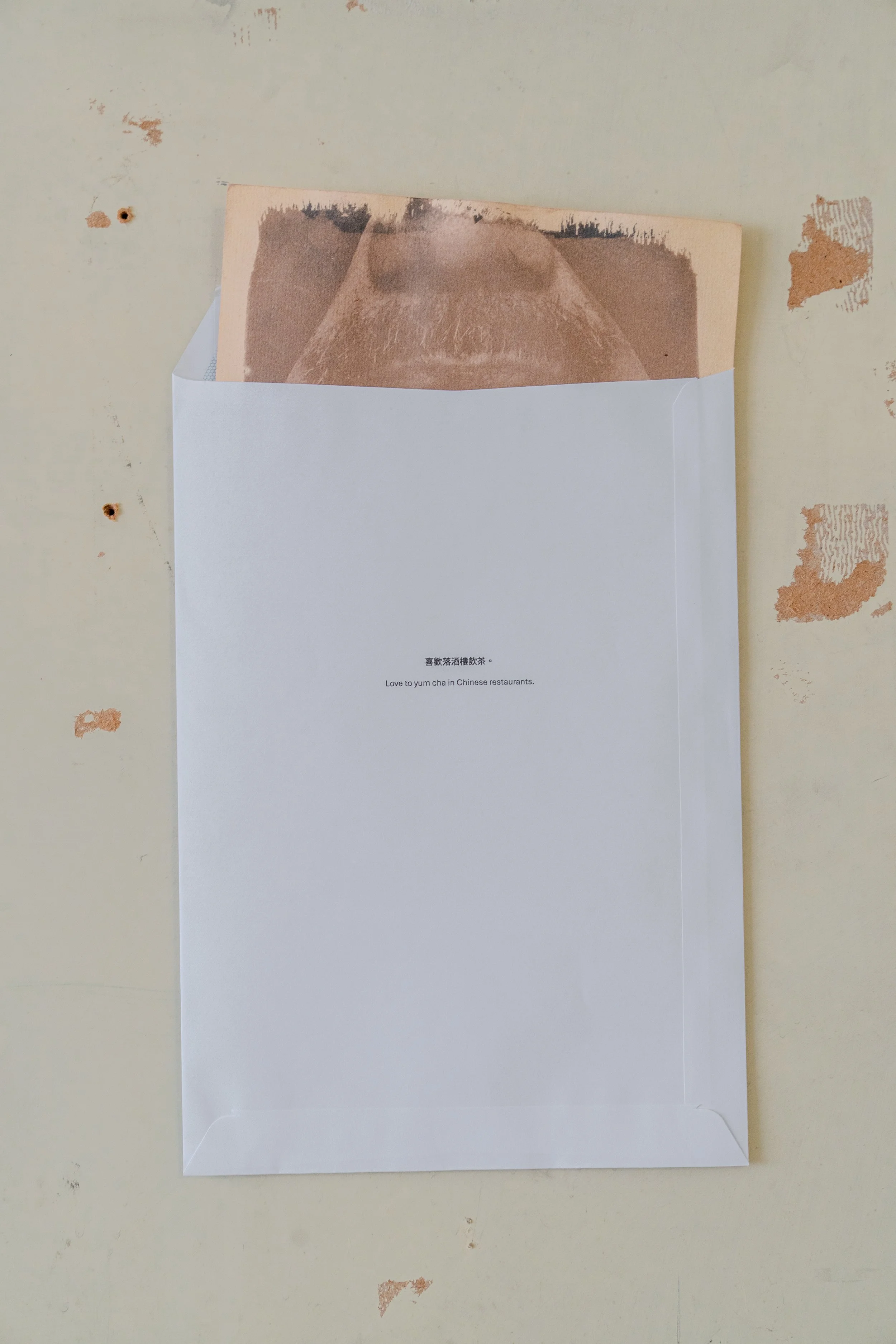
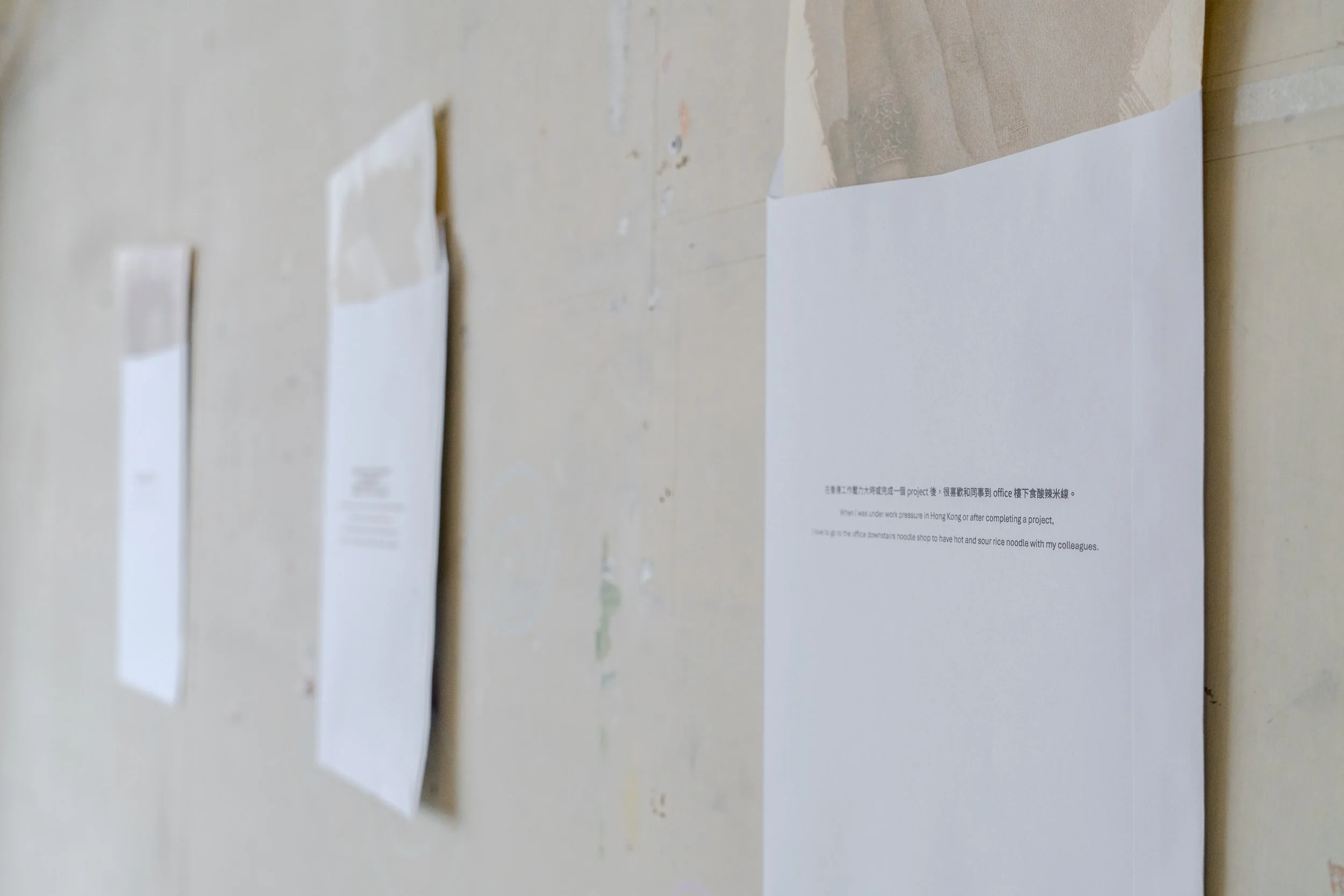
The work is presented as a series of food-toned cyanotypes in varying hues. Each print is placed inside a paper envelope, with the participant’s food story printed on the outside. Viewers must physically open the envelope to reveal the image inside — an act of uncovering, touching, and approaching the work with intention.
This gesture reflects the nature of identity: something that is not immediately visible, but gradually revealed through attention, context, and care.
I hope viewers leave the work with a lingering question:
When we are asked to redefine ourselves in a new land, which taste, which memory, reminds us of who we are?